
A Noul is the yes/no question type in Jev AI, the decision model TypeSafe released on September 15, 2026. It returns the probability, from 0 to 1, that the answer is yes, which makes it the simplest way to use Jev: one question in, one number out. What that number triggers in your systems is a business decision.
- What is a Noul, and what does it return? Learn how to read a value like 0.40.
- When should your team use one? See where a Noul fits better than a Choice or a Score.
- Who sets the cut-off? Understand why the threshold needs a business owner.
A Noul Is Jev's Yes/No Question, Answered with a Probability
Your code sends Jev the text to judge, which TypeSafe calls the state, and a yes/no question in plain English. Jev sends back one number: the probability that the answer is yes. This is a one-question version of the example in TypeSafe's documentation, sent to the Jev API:
{
  "model": "jev-latest",
  "state": "I have asked three times now. Can I please just talk to a real person?",
  "questions": {
    "is_human_escalation": {
      "type": "noul",
      "instructions": "Is the customer asking for a human agent?"
    }
  }
}
Answer: "is_human_escalation": { "type": "noul", "noul": 0.99 }
You can add a second Noul, or twenty, to the same request. Jev reads the state once and answers every question in parallel, so a checklist of conditions takes one call instead of twenty, and each extra question adds only its own input tokens. I covered what that does to the bill, and whether you can run Jev on Azure, in a separate article.
The documentation does not explain the name. TypeSafe's founder and CEO, Diogo Almeida, did in a Hacker News comment: "noul" is "short for bernoulli" and "maps to if-statements". A Bernoulli trial is a single yes-or-no outcome. So each Noul settles one if-statement, and its number tells your code how sure Jev is.
A Noul's Number Carries Both the Answer and Its Certainty
Jev's other question types return a separate confidence score. A Noul does not, because its number already carries it. Close to 1 is a firm yes, close to 0 is a firm no, and around 0.5 Jev gives both about equal odds. TypeSafe recorded these answers from Jev 1.13 to the question "Is the customer asking for a human agent?":
| Customer message | Noul |
| Thanks, that fixed it! | 0.02 |
| How do I reset my password? | 0.07 |
| I need this sorted today, whatever it takes. | 0.26 |
| Are you a bot? | 0.40 |
| Is there any way to speak to someone about my invoice? | 0.84 |
| I have asked three times now. Can I please just talk to a real person? | 0.99 |
The four outer rows need nobody's judgment. The two in the middle do. "I need this sorted today" is urgent but never asks for a person, so it lands at 0.26. "Are you a bot?" only hints at wanting a human, and at 0.40 the model is close to a coin toss.
Jev leaves the decision on those middle values to your code. Before anyone sets a cut-off, check that a yes/no question was the right one to ask.
A Noul Is the Right Question Type Only for Yes/No Answers
A Noul fits a question whose answer is yes or no. When the answer is one of several options you list, Jev has a Choice, and when it sits on a scale you define, a Score.
Noul or Choice? A Choice picks from up to 255 options and returns a probability for each, plus a confidence value. A yes/no Choice returns different numbers from a Noul. On the same refund question, TypeSafe's known-issues page shows the Noul at 0.22, while a yes/no Choice gives "yes" 0.01. A threshold tuned on one cannot be reused on the other.
Noul or Score? A Score places the input on levels you describe, here four levels from 0 ("no experience") to 3 ("deep expertise"). For a candidate with two years of daily Python at work, the Noul "Is the candidate strong in Python?" returned 0.81, and the Score returned 2.05, level 2, "regular use in a job". The Noul measured how likely "strong" is to be true. Only the Score measured how much experience there is.
Whichever type you choose, ask one condition per Noul. "Is the customer angry and asking for a refund?" makes Jev judge two things at once, while two Nouls combined in code give you two numbers you can act on. With the questions settled, they can go where your agents already run.
Copilot Studio and Foundry Agents Can Ask a Noul Today
As of September 29, 2026, Jev is not in the Microsoft Foundry model catalog, but a Copilot Studio agent can call it through an HTTP request node, and a Foundry agent through an OpenAPI tool. The Copilot Studio node sends your API key in a header and saves the reply as a variable the next step can test. In Foundry, developers describe the TypeSafe endpoint in an OpenAPI tool with API key authentication. The Copilot Studio route needs no code, so a maker can set it up.
Good first uses are yes/no checks where a wrong answer has a price you can name: handing a conversation to a person when the customer asks for one, flagging personal data in a message, or checking a risky tool call before the agent runs it. LangChain already ships that last check as ready-made middleware for its own framework.
The text you judge leaves your tenant. Every call sends the state to TypeSafe or to a gateway such as OpenRouter, Vercel or Cloudflare, so that provider's data terms belong in your AI data risk review before real customer text goes through.
Wiring the call is the quick part. Deciding what the number should trigger takes longer.
Your Threshold Decides Who Acts on the Answer
Code turns a Noul into an action by comparing it with thresholds, so those numbers should be set by whoever pays when the answer is wrong. TypeSafe's routing example uses two: above 0.8 the system acts on yes, below 0.2 it treats the answer as no, and everything in between goes to a person. Raise the upper line when acting on a false yes is expensive, such as issuing a refund. Lower the bottom line when silently missing a yes is expensive, such as a safety flag, so more borderline cases reach a reviewer.
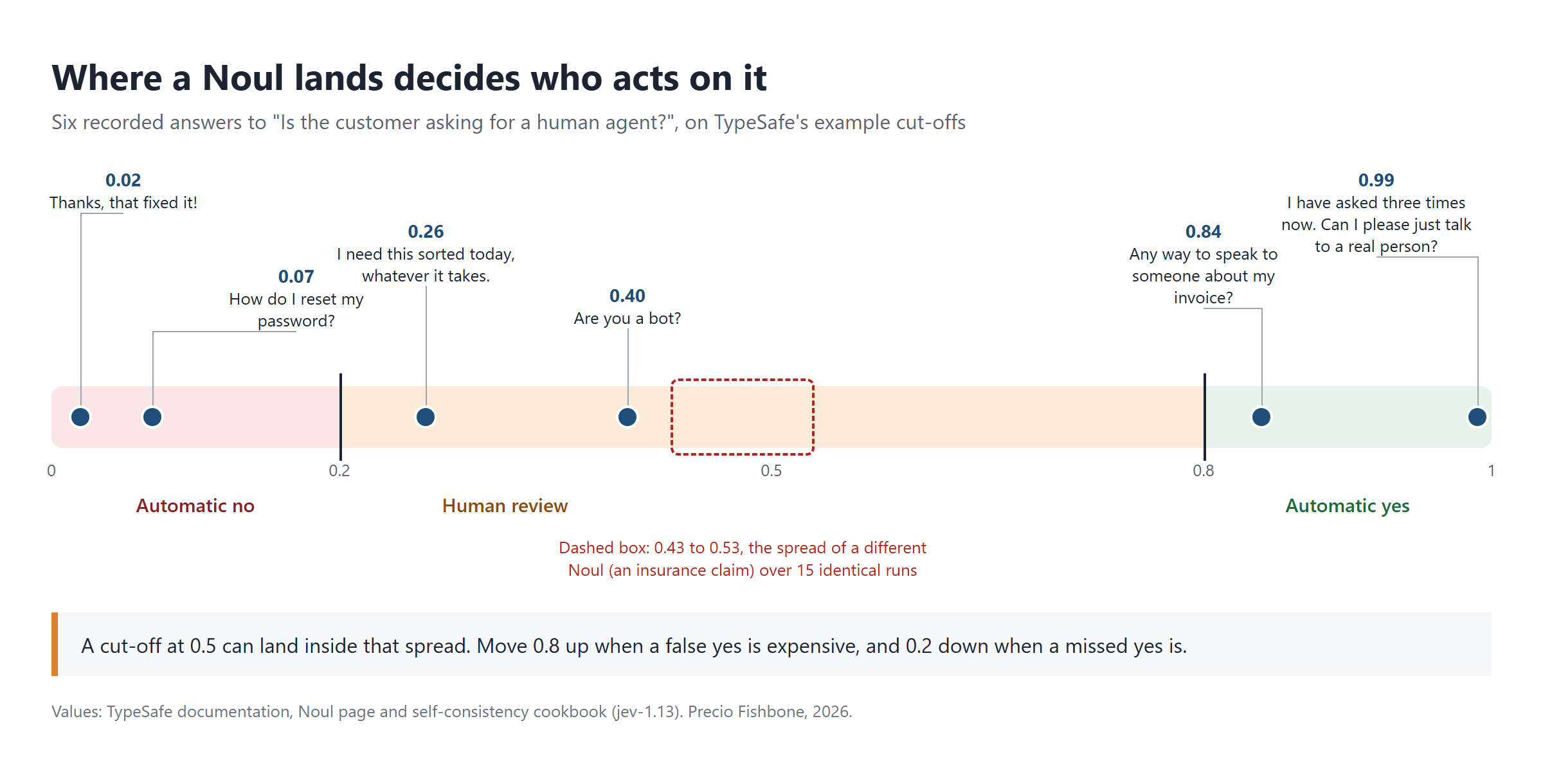
Figure 1. Where a Noul lands decides who acts on it. View full-size image
The tempting shortcut is one line at 0.5 with no review band, and it fails on the cases that matter. In TypeSafe's own consistency test, one question about an insurance claim, sent with the same claim 15 times, came back anywhere from 0.43 to 0.53. With a cut-off at 0.5, the same claim would count as covered on some runs and not covered on others.
Don't read the number as an exact percentage yet either. TypeSafe says Jev is trained to give calibrated probabilities, meaning that of all the answers scored 0.8, about 80 percent should turn out to be yes, but it has not published a calibration curve in its docs or launch post. An independent calibration study on 300 synthetic support tickets found Jev's yes/no answers right 92 percent of the time, more often than their values suggested. Running a few hundred of your own labeled cases in the background first shows where your cut-off should sit.
Treat the threshold like any other control in your AI risk management: a named business owner signs off every change, and each decision is logged with its probability and the model version, because the jev-latest name moves to each new stable release.
Work with Precio Fishbone
A Noul is a yes/no question with odds attached, and its threshold needs an owner. If your team is testing Jev in Copilot Studio or Foundry, book a free consultation with our AI team, or email me directly at par.johansson@preciofishbone.se.
Talk to our expertFrequently Asked Questions
Is "noul" short for null?
No. TypeSafe's CEO has said the name is short for Bernoulli, the statistical term for a single yes-or-no trial. In Romanian, "noul" means "the new", which is also unrelated to Jev.
Can a Noul hallucinate?
It cannot return anything other than a number between 0 and 1, because Jev only produces answers in the shape of the question type. It can still return the wrong number, so test it on your own cases first.
Can Jev count items with Nouls?
Yes, one Noul per item. TypeSafe's documentation says Jev does not count reliably, so the recommended pattern is to ask a separate yes/no question for each item in a single call and add up the answers in code.
How much does a Noul call cost?
Jev is priced per input token, $0.042 per million as of September 29, 2026, and output is free. The documentation's two-question support example used 360 input tokens, about $0.000015. The bigger number is how many calls your agents make, which belongs in your AI cost management.
Share this on

Pär Johansson
Pär works with international business at Precio Fishbone, project delivery & digital services, helping turn complexity into progress and strategy into long-term value. With many years of experience in international business, He is known for building strong relationships and turning plans into meaningful progress. Driven by people, trust and sustainable growth.